Requisition
First entry.
Today, I requested a Leeds & Northrup "Type S" 5300 be sent up to the lab from New Mexico for disassembly and testing.
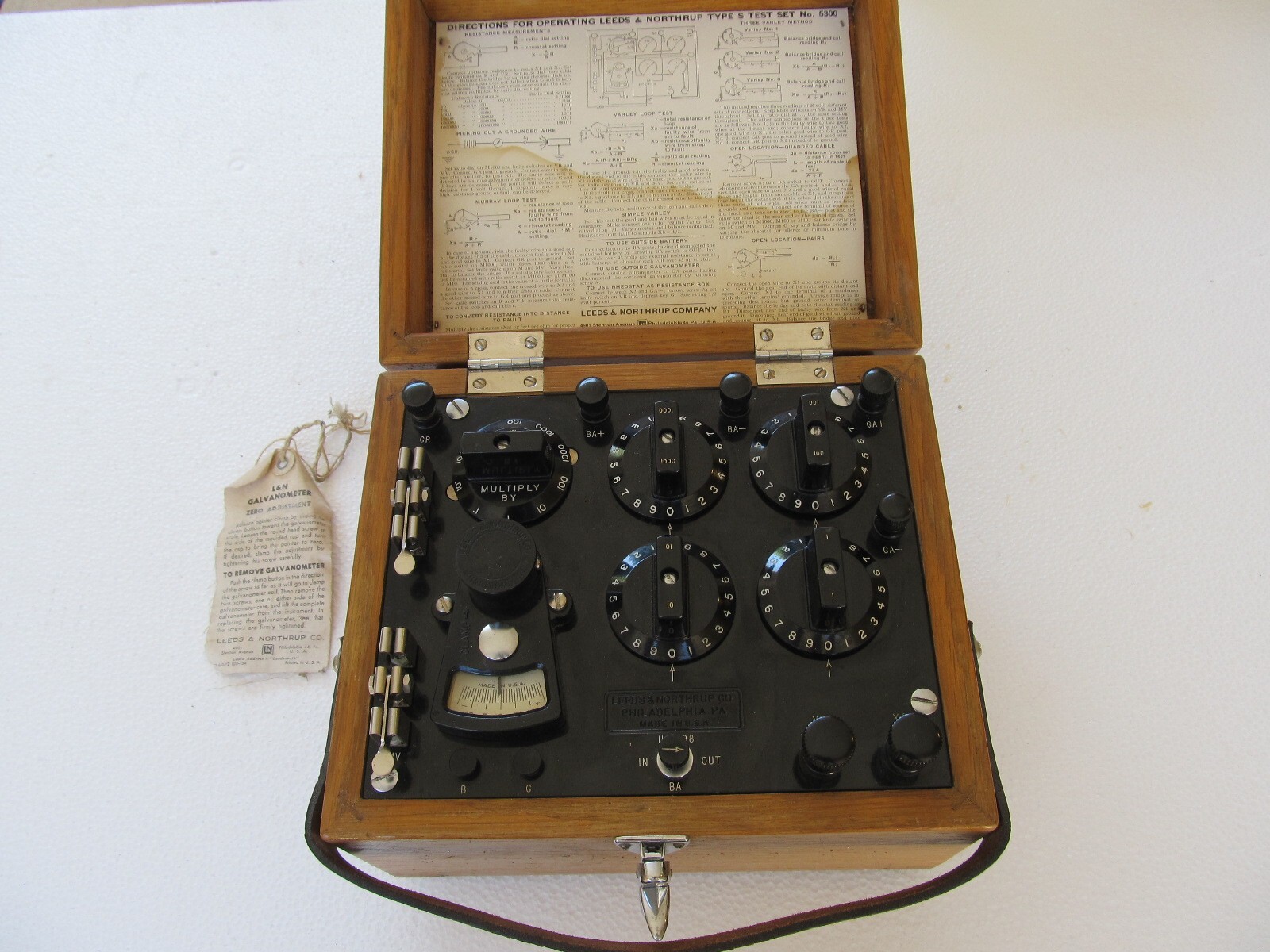
It is a galvanometer test set, which is a tool for calibrating galvanometers, devices which are the ancestors of the modern multimeter. I have no idea exactly when this was made, but it is probably late 1920s.
I have racked my brain for days trying to land on an exciting vision for the instrument. Those rotary switches dominate the panel. Rotary switches are something I love dearly, and something I don't see often enough on commercial gear. I suppose partly because they are large, expensive, and heavy compared to digital control schemes. All the more reason to treasure them.
I'm finding it useful to first decide what they will NOT be rather than try to decide what their eventual role will be.
Rule #1:
They shall not alter the pitch. I can see the "multiply" knob on the left possibly becoming an "octave" switch, but that's it. We can provide a CV jack for pitch control, or not.
I tend to take for granted that any synthesizer can and should be played like a piano. But perhaps removing that freedom will open the gates to sonic exploration without the constant pressure to play a coherent progression or melody. Maybe we lean into the weird and it's just set at a certain frequency.
Another thing that crosses my mind is the possibility of replacing the binding posts with potentiometers. I think these instruments will benefit from 1/4" phone plugs as patching interfaces. Not every device I source will be from this era, and later devices (40s and up) tend to ditch binding posts in favor of banana plugs.
I have experienced noise issues in the past while patching DIY synths with banana plugs though, so more careful consideration is needed.
Anyway, it seems these musings are fruitless without the device in my posesssion.
It arrives tomorrow.